New Forest Cycle Hire & Forest Info...

The Forest...

People who live here will tell you that The New Forest is a lively, working landscape with many secrets to discover. The only way to reveal The New Forest’s hidden gems and truly appreciate the sights, sounds and smells of the forest is to get out there and explore the heathlands, woods, wildlife and villages of the New Forest.

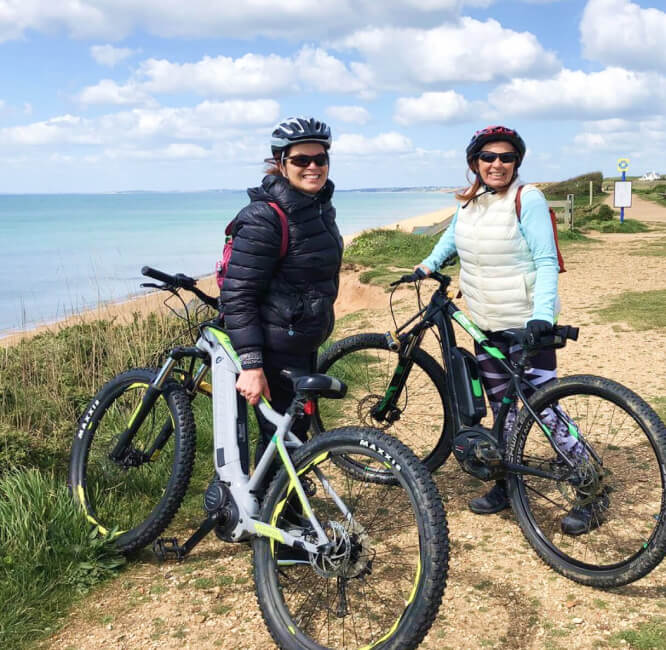
Try to escape from the confines of the car and head out on foot, bicycle or on horseback to get a more intimate feel of the forest, its coast and villages. The New Forest is a genuine cyclists paradise with many circular and linear routes.

There are many picnic and toilet facilities, all of which are carefully sited to allow visitors safe and easy access to a variety of forest landscapes. There are over 100 miles of quiet, traffic-free forest trails and the 40mph speed limit on most roads makes it a safer place to cycle.


The varied terrain makes it a cycling destination for all ages and abilities but it is most suited to recreational riders, couples and family groups.

The New Forest is the most recently formed National Park in the UK but the fragile forest environment gives home to many species of flora and fauna which need protection from the pressure weighed down by recreational use.

With over 20 million day visits, the management of recreational use is crucial to the future of the New Forest habitats, and as cyclists, we need to ensure we keep to the designated trails.

The following principles should be adhered to all times:

· Please keep to way marked gravel tracks when cycling off road.

· Always ride in single file when roads are narrow and never ride more than two abreast

· Make sure you are visible by wearing bright colours.

· Always use lights after dark or in poor daytime visibility.

· Plan your route to be out of the Forest by dusk.

· Be aware of animals, other cyclists, pedestrians and drivers whether you are on gravel tracks or on the road.

· Keep your speed down, give way to walkers and be friendly to other forest users.

· Keep well away from any work going on in the Forest .

· Do not pass any vehicle loading timber until you've been told it's safe to do so.


About The New Forest

The people

•Around 174,500 people live in the area covered by this consultation (2001 census).About 34,000 of those live within the National Park boundary.

•New Forest District, with a population of 171,500 has the second highest population among non-metropolitan districts in England .

•Recent population projections indicate that the area's population numbers will peak in 2006.Although 4,000 new homes could be built under proposals in the South East Plan, by 2026 there would be 7,500 fewer people living here.

•Yet there could be 8,000 more single-person households – mostly middle-aged and older people.

•By 2026 the school-age population is expected to fall by 5,000 to 16,500 while the number of residents over 65 will rise by around 14,000 to more than 54,700.

•Nearly a quarter of the population is over 65.

•Economic activity rates in the New Forest are lower than for Hampshire as a whole with 47% of the population economically active compared with 52% for Hampshire.

•In the next 20 years, it is predicted that this figure will fall to 44% while the figure for Hampshire will remain above 50%.

•Almost 18,000 people commute into the New Forest each day to work, while almost 31,000 commute out of the New Forest .

The place

The New Forest National Park

•England's newest and smallest national park, it covers an area of 57,000 hectares (220 square miles).This is 73% of the area covered by this consultation.

•More than half (56%) of the Park is of national or international value for nature conservation.

•It forms the largest continuous expanse of heath, valley mire and pasture woodland in lowland Europe .

•Extensive opportunities for outdoor recreation are provided across the Open Forest .

•The landscape is still shaped and maintained by free-roaming ponies and cattle, part of the ancient pastoral system of commoning.

•There are also important private estates, farmland, villages and 42 kilometres (26 miles) of unspoilt coastline.

Towns and villages

•The majority of people live in the towns and larger villages that surround the National Park – Totton, Marchwood, Hythe, Holbury, Blackfield, Lymington, Milford-on-Sea , New Milton, Ringwood and Fordingbridge.

•Totton has the largest population while Lymington has the largest commercial centre.

•Brockenhurst, Lyndhurst and Sway are the main settlements within the National Park.

•In the last 15 years the rate of new house-building was reduced and further reductions are planned up to 2026.While this reduces the development threat to the area's sensitive environment, it makes it more difficult to provide sites for affordable housing and for development that would create more local jobs.

•There are 37 conservation areas, including the historic centres of Lymington, Ringwood, Hythe and Fordingbridge.


Click here for the Forestry Commission Cycle Code

Click here for the Countryside Access website